
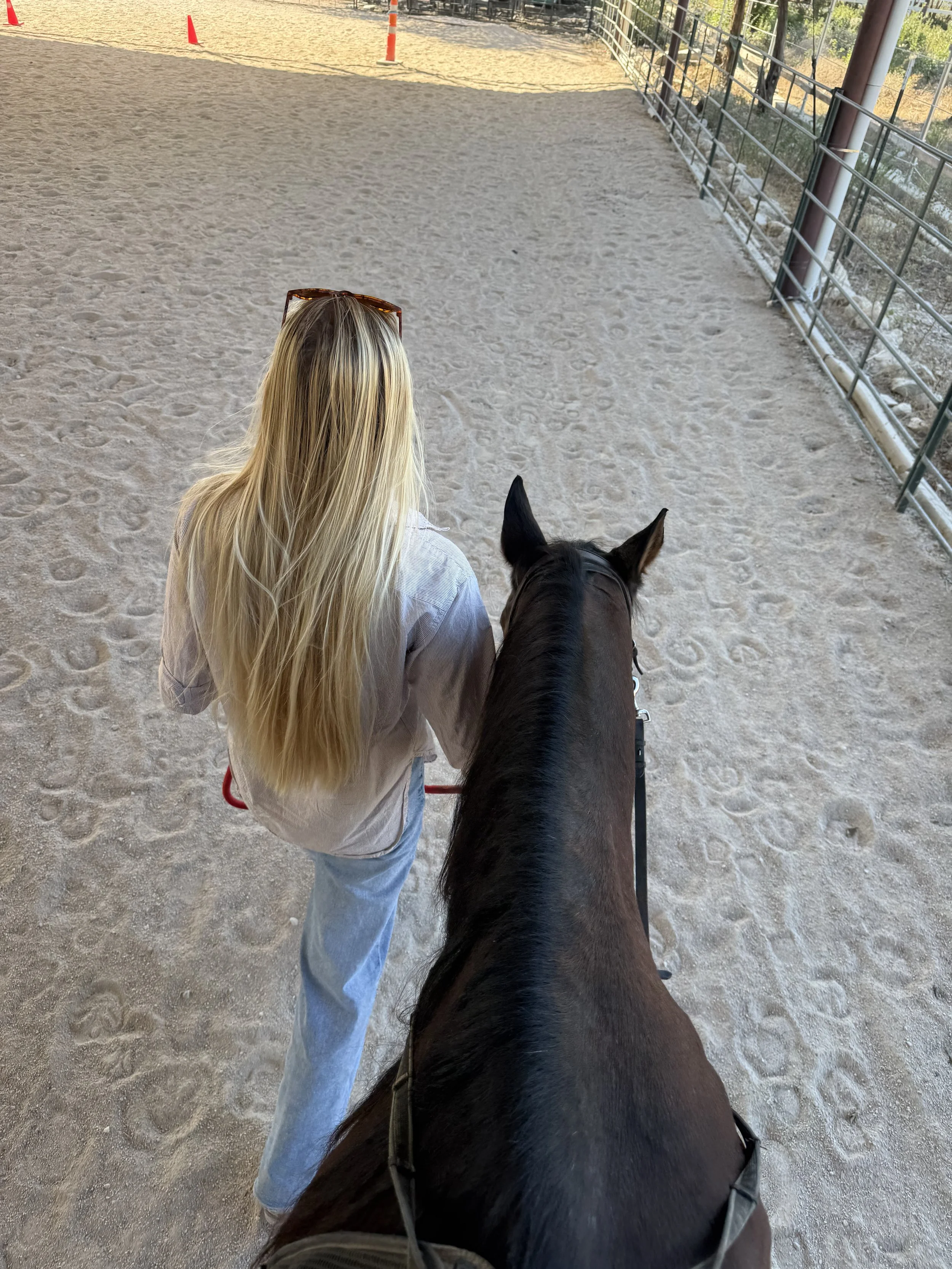
THERAPEUTIC RIDING
Riding a horse in the great outdoors is an amazing and fun way to get some exercise and learn about horses.
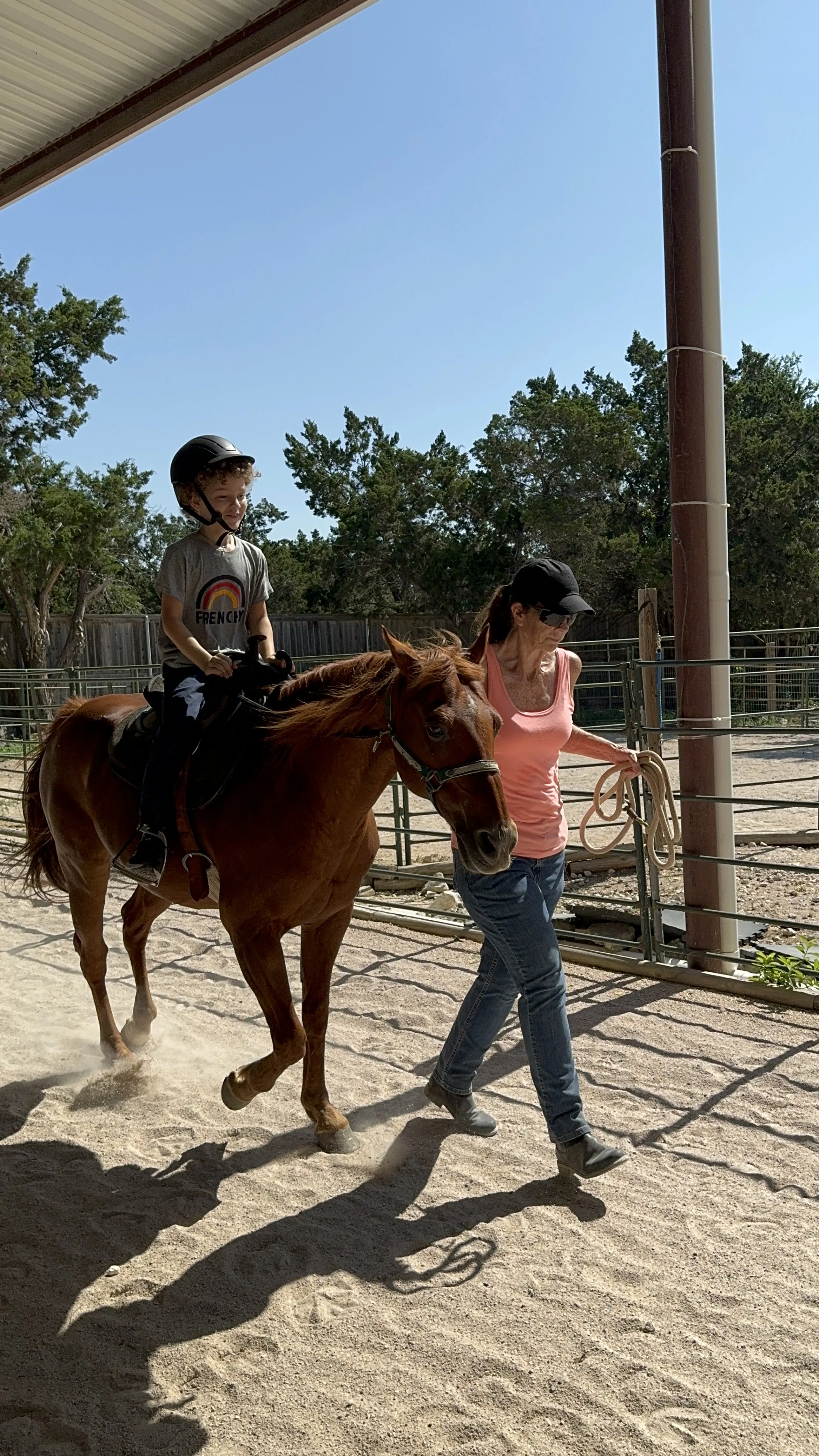
Did you know that riding produces oxytocin in the body which is why people feel better after riding? We specialize in providing therapeutic riding services to all populations, but not limited to those who deal with:
*Physical and developmental disabilities
*Mental health issues
*Individuals who need confidence building and physical development
There are physical, cognitive, and emotional benefits with horseback riding. Many riders in our program report feeling physically stronger and more flexible. They also feel increased self-esteem, decreased anxiety, improvements in problem solving, attention, memory, and more! Fill out our intake form to get started!
-
Therapeutic riding uses horseback riding to help individuals with physical, emotional, cognitive, or social challenges build strength, confidence, and new skills.
-
ADD or other hyperactive disorders
Developmental delay
Emotional, behavioral, challenges
Autism Spectrum Disorder
Substance abuse
Cerebral Palsy
Visual/speech impairment
Post-Traumatic Stress Disorder
-
Benefits often include improved balance, coordination, muscle tone, focus, communication, confidence, and emotional regulation.
-
The Professional Association of Therapeutic Horsemanship International promotes safety and optimal outcomes in equine-assisted activities and therapies for individuals with special needs.
PATH is a global authority, resource and advocate for equine-assisted activities and therapies and the equines in this work that inspire and enrich the human spirit, with more than 850 member centers and nearly 7,600 individual members in countries all over the world, who help and support more than 54,000 men, women and children with special needs each year through a variety of equine-assisted activities and therapies programs.
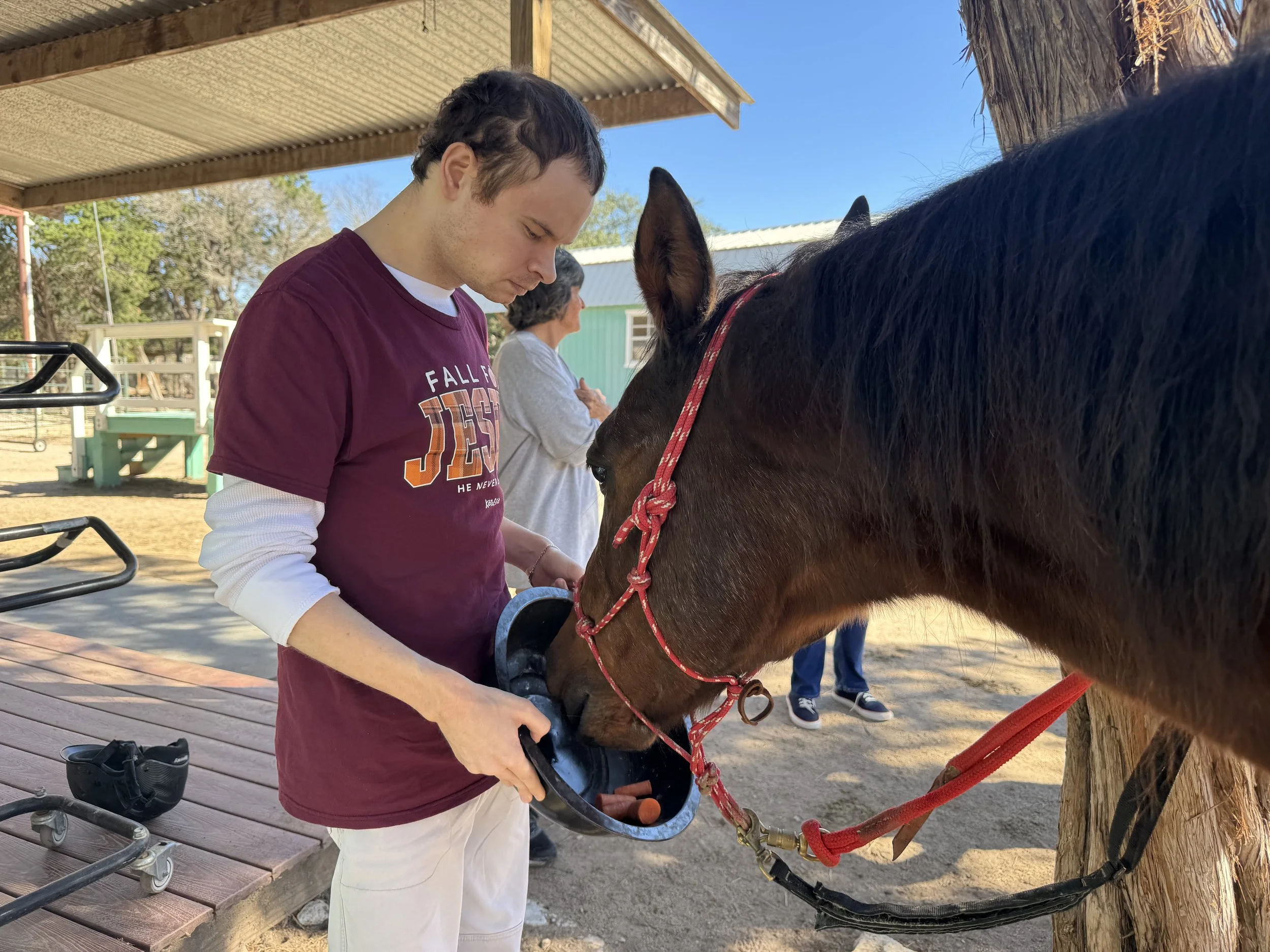
Scientific Benefits of Horseback Riding
Horseback riding offers a unique combination of physical, cognitive, and emotional benefits because a horse’s movement naturally mimics the human walking pattern. This creates powerful outcomes backed by research:
1. Improved Core Strength & Balance
The rhythmic, three-dimensional movement of a horse engages a rider’s core muscles, helping develop better posture, stability, and balance—similar to physical therapy on the move.
2. Enhanced Motor Skills & Coordination
Riders must coordinate their hands, legs, eyes, and posture simultaneously, which strengthens fine and gross motor skills as well as overall body awareness.
3. Sensory Integration & Regulation
The motion, textures, sounds, and temperature variations around a horse provide rich sensory input that helps regulate the nervous system. This is especially beneficial for individuals with sensory processing challenges.
4. Boosted Cognitive Skills
Riding encourages focus, sequencing, following directions, problem-solving, and memory. Each task—steering, stopping, navigating obstacles—requires attention and planning.
5. Increased Confidence & Emotional Well-Being
Working with a large, responsive animal builds confidence, responsibility, and self-esteem. Horses offer nonjudgmental companionship, which reduces stress and supports emotional regulation.
6. Social & Communication Growth
Many riders naturally increase verbal communication, expressiveness, and social engagement when interacting with instructors, volunteers, and the horse itself.
7. Improved Mobility & Flexibility
The movement of the horse stretches tight muscles, promotes pelvic mobility, and supports joint flexibility—particularly beneficial for riders with cerebral palsy, muscular challenges, or developmental delays.
Can Insurance Help Cover Horse-Based Therapy?
In general, traditional health insurance doesn’t typically cover standard therapeutic riding or adaptive riding lessons because they are considered recreational or educational activities rather than clinical treatments. Most plans do not specifically list therapeutic riding as a covered therapy.
However, there are pathways where insurance might help cover horse-related therapy:
-
When horseback riding or horse movement is used as part of formal physical, occupational, or speech therapy and prescribed by a doctor, insurance is more likely to cover it because it’s billed under standard therapy codes.
-
For both EAP and clinical therapy approaches, insurers often require a referral or prescription from a licensed clinician and proof that the therapy is “medically necessary” for your condition (such as PTSD, anxiety, autism, etc.) to consider coverage.
-
Coverage depends heavily on your specific plan, provider, and state rules, and while private insurers sometimes offer support, Medicaid and Medicare usually do not cover equine therapy unless it’s part of a broader medically justified program.
-
If sessions are led by a licensed mental health professional and billed as actual psychotherapy or behavioral health treatment, some health plans may cover part of the cost under mental health benefits
Because each insurance policy is different, the best first step is to:
Call your insurance company to ask what they will cover under behavioral health, occupational therapy, or physical therapy benefits.
Work with your clinician (doctor, therapist, PT/OT) to get a referral and documentation of medical necessity.
Ask your horse therapy provider if they can help verify benefits or submit pre-authorization requests on your behalf.
If insurance won’t cover therapeutic riding directly, many families and individuals use HSAs/FSAs, disability waivers, grants, scholarships, payment plans, or nonprofit support to make participation more affordable.
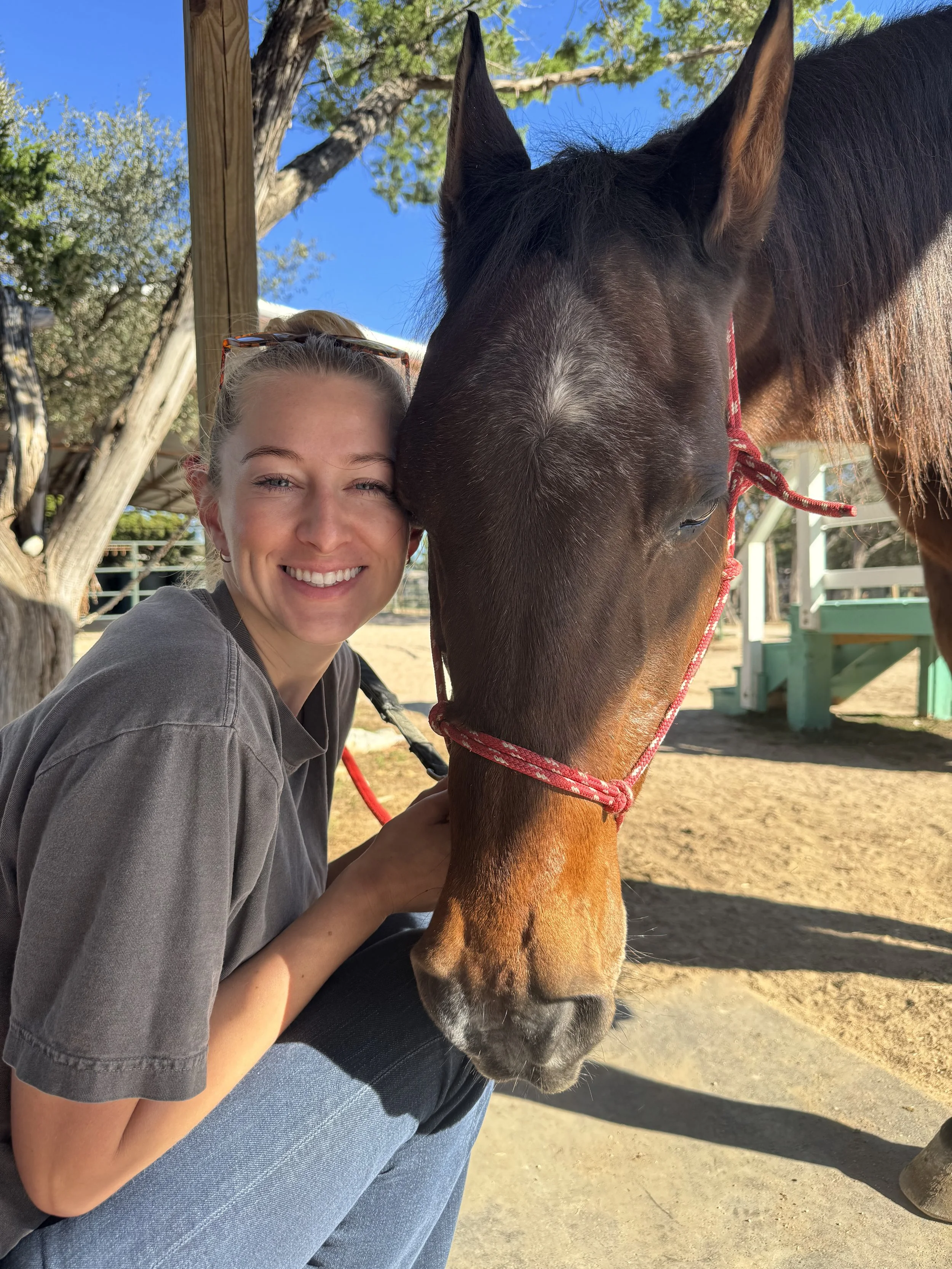
Volunteer With Us & Make a Real Impact
Therapeutic riding is more than time spent in the saddle—it’s a transformative experience that builds confidence, coordination, emotional connection, and pure joy for riders of all abilities. As a volunteer, you become an essential part of that magic. Whether you’re helping in lessons, supporting our riders from the ground, or caring for our incredible horses, every moment you give directly changes someone’s life.
No experience is necessary—just a kind heart, a willingness to learn, and a desire to make a difference. If you’re looking for a meaningful way to spend your time, to be outdoors, and to witness unforgettable breakthroughs, volunteering at Hearts may be the most rewarding part of your week.